
Phantom Blade Zero DEALS
Verdict: Phantom Blade Zero is a striking action RPG that puts the pleasure of responsive swordplay ahead of elaborate genre reinvention. Its commanding weapon animations, distinctive kungfupunk setting and inventive bosses give S-GAME’s debut plenty of identity. A fragmented plot and occasional technical roughness keep it from being an entirely effortless recommendation.
Demium Games editorial score: 8.6/10. This is an evidence-based desk review, not a firsthand hands-on review. Our editors assessed the game’s documented systems and independently published evaluations from outlets whose critics played the released game. We have not personally played, benchmarked or timed Phantom Blade Zero. The score is the arithmetic mean of six editorial category assessments, rounded to one decimal place.
Quick verdict: is Phantom Blade Zero worth buying?
For fans of fast, technical action with a strong martial-arts identity, the answer is a qualified yes. The clearest strengths are the freedom of movement in combat, the ability to switch between different offensive and defensive approaches, and boss fights that reward learning their patterns. Players seeking a deeply character-driven RPG or sprawling open world should adjust expectations: this is primarily a combat-led adventure with a more directed structure.
Story and setting: Soul’s 66 days
You play as Soul, a swordsman betrayed and framed for a killing within his organization. Brought back from death with a tainted heart, Soul has only 66 days to uncover the truth and find a way to survive. The premise gives the journey a strong ticking-clock identity, while its visual language draws on wuxia, martial-arts cinema, dark fantasy and unsettling folklore.
That foundation is considerably clearer than some of the game’s storytelling. Critics who completed the game, including Push Square and TechRadar, describe a plot told through fragmented memories, exposition and a large cast of names. The world can feel intriguing even when the connections between events are harder to follow. In practice, the theme of a warrior desperately fighting for time is memorable; the narrative delivery can interrupt the momentum built by the fights.
Official Phantom Blade Zero Gameplay Trailer
Watch the official gameplay trailer published by the Phantom Blade Zero channel to see the game’s fast sword combat, defensive timing and weapon animations. Trailer footage is promotional material and should not be confused with our own gameplay capture.
Combat: style that serves mechanical decisions
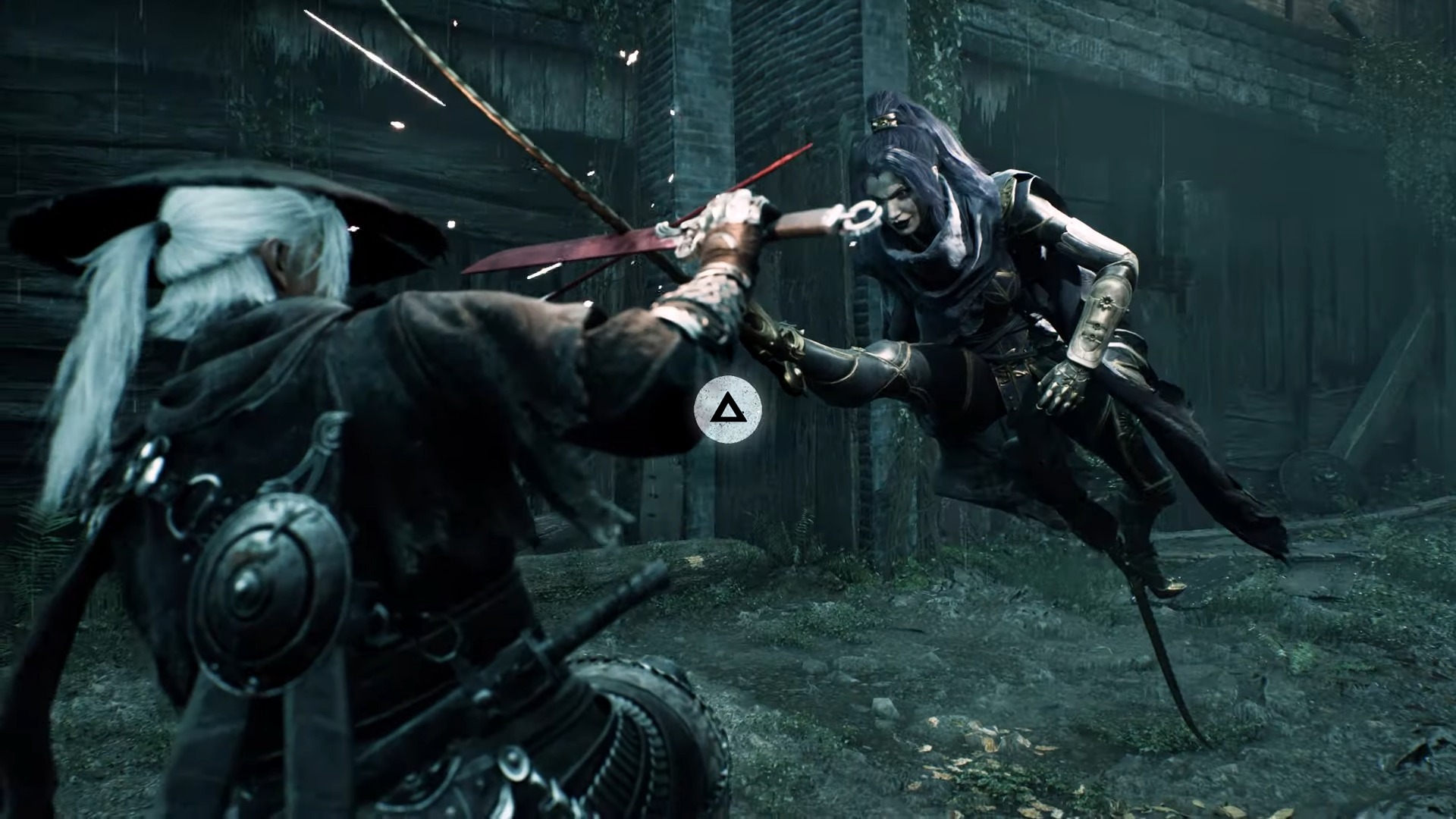
The defining quality of Phantom Blade Zero is that its lavish animations are more than decoration. Attacking, defending, dodging and parrying are tightly interconnected, letting a confrontation move between offense and protection without becoming a slow, stamina-draining duel. Instead of positioning every fight as a conventional Soulslike exchange, S-GAME leans into the rhythm and spectacle of martial-arts choreography.
Push Square’s PS5 Pro review describes normal attacks, dodges and parries that do not consume stamina in the way players might expect from a typical Soulslike. Sustained blocking and heavy attacks use the relevant resource, while powerful abilities broaden the tactical palette. That structure encourages confident engagement rather than constant retreat. We cite that description as the publication’s testing, not our own.
Why parries and weapon swapping matter
Good action combat should give each defensive choice a meaningful consequence. Parrying can create an opening; dodging repositions Soul; blocking offers another response when timing is uncertain. Weapon options and special martial techniques then change how that opening can be exploited. The meaningful question is rarely just which attack deals the most damage—it is which response sets up the safest and most effective next sequence.
Multiple critics praise the responsiveness and weapon variety. VGC calls the action exceptionally fast and expressive, while GamesRadar+ emphasizes the depth of the arsenal. Their convergence is persuasive because it focuses on mechanics rather than solely on cinematic trailers. Our 9.5/10 combat score reflects that broad consistency, with the caveat that individual players may prefer a slower, more deliberate action style.
Boss design: memorable tests of mastery
The strongest reported encounters turn the game’s mechanics into readable challenges. An effective boss should push players to distinguish an attack they can parry from one that calls for movement, while creating satisfying chances to counterattack. Phantom Blade Zero’s larger-than-life martial-arts enemies appear designed around dramatic escalation, but successful encounters require more than visual spectacle.
IGN, Push Square and GamesRadar+ all identify boss fights as a central strength. Some reviewers report hard battles that remain achievable through mastery of the core moveset. We score boss encounters 9.2/10 on that evidence, rather than pretending to have completed or ranked the bosses ourselves. Players who dislike repeated attempts may still find later confrontations demanding.
Exploration: handcrafted environments, uneven freedom
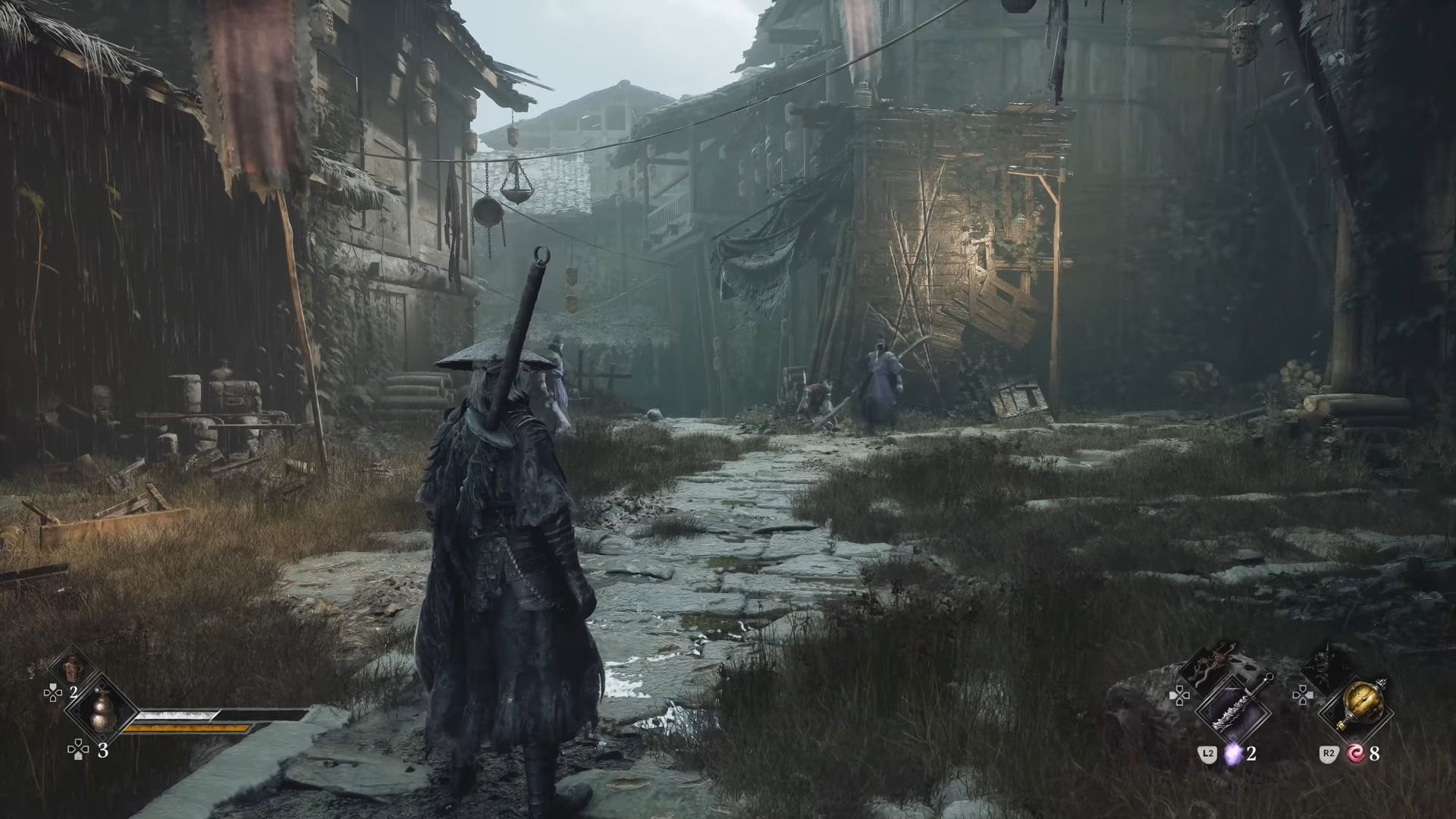
The game’s environments combine ruined spaces, elaborate architecture and fantastical Chinese landscapes. The world rewards looking beyond the immediate combat path through optional challenges, gear and hidden encounters. Yet there is a difference between rewarding exploration and a seamless open world; Phantom Blade Zero is closer to a sequence of carefully arranged, connected spaces.
Published reviews disagree about the trade-off. Push Square values optional quests and secret areas, while VGC sees some areas as linear or less inspired than the combat. Both views can be true: a stage may contain worthwhile discoveries without offering broad freedom of movement. Our 8.4/10 exploration score reflects that mixed evidence.
Visual identity, sound and atmosphere
Phantom Blade Zero’s distinctive kungfupunk look fuses traditional martial-arts imagery with mechanical invention and supernatural horror. The aesthetic is not merely an Unreal Engine 5 showcase. Costumes, weapon silhouettes and environmental motifs communicate the game’s history and its uneasy supernatural world.
Reviewers broadly praise the animation and environmental art. TechRadar highlights audio and the impression created by weapon impacts, while Push Square notes the visual spectacle and occasional audio imbalance. The overall package appears exceptionally accomplished for a major debut in this style, although individual platform settings can affect the look. Our 9.1/10 presentation score is an editorial synthesis, not a measurement of image quality.
Storytelling and pacing: the biggest reservation
A combat-focused game does not require a simple story, but it benefits when its narrative supports rather than repeatedly interrupts play. Phantom Blade Zero’s flashbacks and exposition aim for an intricate account of betrayal and survival; critics differ on how successfully those threads are resolved. GamesRadar+ and Push Square both raise concerns about storytelling consistency.
This becomes more noticeable when an otherwise exhilarating battle is followed by lengthy explanations or collectible text. Players invested in the atmosphere may accept those moments as worldbuilding, while those primarily interested in combat may view them as obstacles. Of our six criteria, story and pacing scores lowest at 7.2/10.
Technical performance: what we can and cannot verify
We have not tested Phantom Blade Zero on a retail PC, PS5 or PS5 Pro. We therefore cannot provide proprietary frame-rate graphs, controller-latency measurements or claims of flawless optimization. Push Square reports generally smooth performance in a PS5 Pro performance-mode playthrough while observing occasional drops during bosses and audio issues. TechRadar reports observations across the PS5 Pro graphics modes; those are their measurements and impressions.
For PC, check the current Steam requirements and recent user reports relevant to your hardware before buying. Steam’s storefront lists controller support and adjustable difficulty, but its Steam Deck compatibility is listed as unknown in the source we checked. Avoid assuming handheld performance or exact ray-tracing behavior from console reviews. Technical polish and accessibility receive an 8.2/10 provisional editorial score in this assessment.
Difficulty, accessibility and who should play
Although the parry-heavy footage may invite comparisons to Sekiro or other demanding action games, Phantom Blade Zero has its own rhythm and difficulty options. Faster, more permissive basic movement makes it attractive to players interested in expressive martial-arts action rather than a strict Soulslike stamina economy. Its demanding bosses still expect pattern recognition, timing and adaptation.
Best suited to: action fans who enjoy learning enemy timing, varied weapons, intricate boss fights and cinematic martial-arts presentation. Less suitable for: players looking for a choice-heavy role-playing campaign, free-form open-world exploration or a consistently straightforward story.
Phantom Blade Zero Standard Edition price — US stores
Price check date: November 1, 2026. We verified the Standard/Base Game at the official US-facing Steam and PlayStation Store product pages. Both showed US $59.99. Steam lists a separate Digital Deluxe Edition and paid upgrade; the prices below refer only to the base game. Prices may change with region, applicable taxes, promotions or storefront updates.
For PC, see the official Steam base-game listing. For PS5, see the official US PlayStation Standard Edition listing. Other storefronts were excluded because we could not directly verify both a current qualifying price and exact official product URL.
Editorial score explained
Our six independently judged categories are combat and weapon design (9.5), boss encounters (9.2), world and art direction (9.1), exploration and level design (8.4), story and pacing (7.2), and technical polish and accessibility (8.2). Their unweighted mean is 8.6/10, rounded to one decimal place. These are editorial evidence assessments; none is a disguised benchmark or claim of in-house gameplay hours.
Final verdict
Phantom Blade Zero stands out in 2026 because S-GAME has translated elaborate martial-arts choreography into a combat system that reviewers repeatedly describe as responsive, demanding and satisfying. Its bosses, visual identity and arsenal look like strong reasons to play. Less coherent storytelling and a few technical edges keep the experience from scoring higher. Demium Games’ evidence-based editorial verdict: 8.6/10 — strongly recommended for action-combat enthusiasts, with clear reservations for narrative-first players.
Sources and review methodology
- S-GAME — Official game information: story premise, release and editions.
- Push Square — PS5 review: hands-on combat, narrative, performance and accessibility observations.
- VGC — PC review: combat, setting, story and level structure.
- GamesRadar+ — Review: combat, world and narrative analysis.
- TechRadar — Review: combat, audio and PS5 Pro graphics-mode discussion.
- Steam — Official base game listing and PlayStation Store US — Standard Edition: price and product verification.
The Review
Phantom Blade Zero
An outstanding wuxia action RPG whose expressive swordplay, demanding bosses and distinctive world outweigh uneven storytelling and occasional technical rough edges. Evidence-based editorial assessment; Demium Games did not conduct an independent playthrough.
PROS
- Expressive, fast martial-arts combat with rewarding defensive play
- Inventive bosses and a varied arsenal
- Distinctive kungfupunk art direction and memorable locations
- Flexible difficulty settings and engaging optional encounters
CONS
- Fragmented storytelling and uneven narrative pacing
- Some linear sections and environmental boundaries
- Reported frame-rate and audio issues on reviewed builds
- Some repetitive lesser-enemy encounters
Phantom Blade Zero DEALS
We collect information from many stores for best price available