
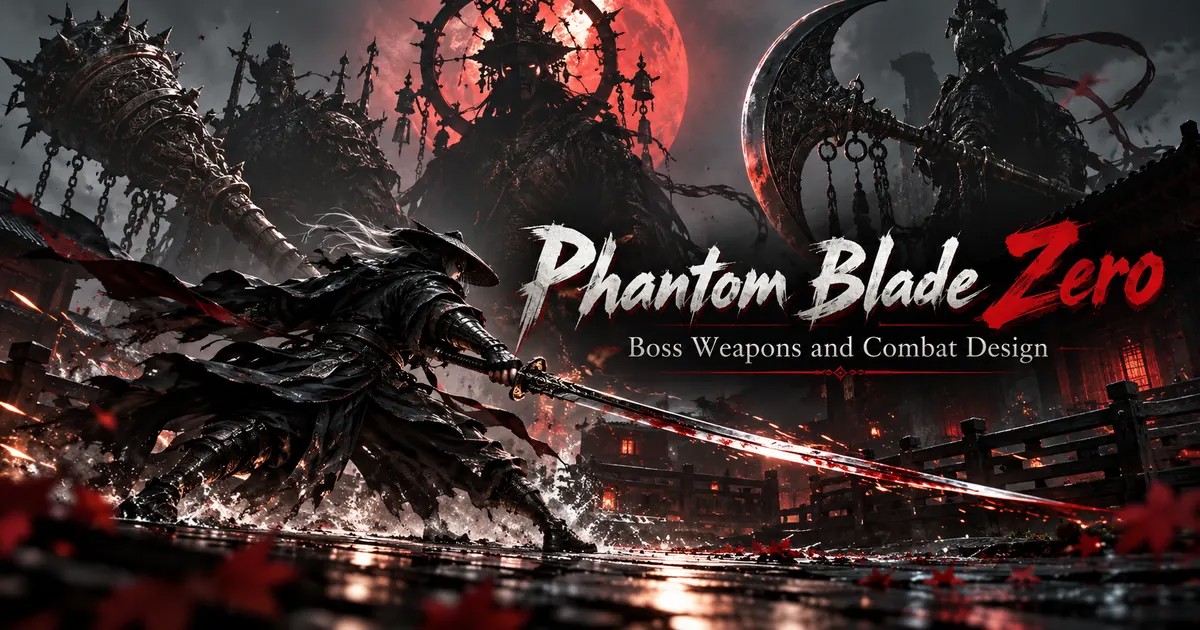
What makes a boss fight memorable: the difficulty, the moveset, or what the encounter tells you about the world? Phantom Blade Zero appears to be pursuing all three. A PlayStation Blog feature published October 28, 2026, outlines a combat system shaped by wuxia cinema, action RPGs, demanding boss encounters and rapid combinations. The most interesting idea is that bosses are not simply obstacles; their techniques and weapons also communicate character.
This is an editorial analysis of officially described design, not a scored review or a claim that Demium Games has played the title.
A hybrid combat identity
PlayStation’s feature describes the game as drawing from different action traditions rather than following a single template. Its fast exchanges evoke character-action games, while formidable bosses invite comparisons with Soulslike challenges. That distinction matters because a game can borrow the intensity of a demanding duel without copying every element of a particular subgenre.
For players, the practical question is how often the system rewards attack, when defense becomes essential, and whether transitions between those states feel legible. Footage and descriptions can suggest a design goal; only hands-on play can establish its consistency.
Boss weapons as a form of characterization
One example highlighted by PlayStation is Jing Ye, the Outlaw. His encounter involves mounted attacks and dirty tricks, including obstructing the player’s view. After the horseback phase, the fight changes, incorporating a dangerous shield and a large sword tied to his ability to recover health.
That progression matters conceptually. Different phases are not only an excuse to increase difficulty; they can reveal how a character behaves when one strategy fails. Here, the described shift from mounted aggression to desperate close combat suggests an encounter built around personality as well as mechanics.
What a duel can communicate without dialogue
The PlayStation account also highlights the Gold-Masked One, played by Donnie Yen, with an encounter in the realm called the Discordance. The described mix of sword attacks, kicks, punches and unblockable throws gives the character a distinct vocabulary of movement.
In action design, a recognizable combat vocabulary helps an opponent feel like a person with habits rather than a generic health bar. A sudden throw or posture change can communicate confidence, deception or danger even before dialogue adds context.
Why readability matters as much as spectacle
High-speed encounters create a design challenge: visually spectacular attacks must still give the player enough information to respond. If several enemies share similar visual effects but demand different defenses, learning can become confusing. Conversely, clear tells can make a fierce fight feel fair even when it is unforgiving.
It remains to be seen how Phantom Blade Zero balances these demands in sustained play. An official showcase can illustrate striking moments, but cannot prove the pacing, camera behavior or difficulty consistency across an entire game.
Questions a full review should answer
A future hands-on assessment should look at input responsiveness, defensive timing windows, how weapons affect exploration, boss variety, camera behavior and how well the narrative explanations fit what happens mechanically. It should also ask whether apparent freedom in combo design leads to meaningful choices or merely many ways to perform similar attacks.
Bottom line
Phantom Blade Zero’s intriguing design promise lies in connecting combat mechanics with character identity. The official material makes a persuasive case for paying attention to its bosses; it does not yet justify a numerical rating from a publication that has not documented a play session.
Source
Editorial note: Analysis of publisher-provided information, not a hands-on review. Source checked November 1, 2026.