
From university computer labs in the 1970s to world-class Olympic venues packed with tens of thousands of screaming fans today, esports has evolved from a grassroots subculture into one of the most dynamic entertainment industries in human history. To traditional sports fans and curious newcomers alike, the world of competitive gaming can feel both exhilarating and intimidating. Fast-paced on-screen action, specialized jargon, and complex game mechanics often leave spectators wondering where to begin. This comprehensive pillar guide breaks down everything you need to know about esports: what it is, how it operates, the games that drive it, and how you can join hundreds of millions of fans worldwide in enjoying the spectacle.
What Is Esports? Understanding the Core Concept
Esports—short for “electronic sports”—refers to organized, competitive video gaming played at a professional level. In esports tournaments, individual players or multi-member teams compete against one another in structured leagues and events for trophies, prestige, and substantial cash prizes, all governed by codified rules, licensed game software, and certified referees.
The defining line between everyday gaming and professional esports is identical to the line separating a friendly pickup basketball game at the local park from the NBA Finals. Casual gaming focuses on recreation, leisure, and personal escapism. Esports, by contrast, demands extreme mechanical execution, comprehensive tactical homework, relentless squad communication, and ironclad mental endurance. To explore this distinction in detail, examine the difference between casual gaming and professional esports.
What Makes a Video Game an Esports Discipline?
Out of thousands of video games released every year, only a microscopic fraction ever cross the threshold into competitive esports. To qualify as a viable competitive title, a game must satisfy several rigorous foundational criteria:
- Uncompromising Competitive Balance: Pay-to-win elements are entirely prohibited. No player can buy in-game advantages, superior statistics, or exclusive weapons with real money. Every competitor starts each round on an identical playing field, where pure skill, game sense, and team coordination dictate the outcome.
- High Skill Ceiling: A competitive title must possess deep mechanical complexity and strategic latitude. This ensures a vast, visible performance gap between an amateur hobbyist, a high-ranked ranked-ladder player, and a world-class professional athlete.
- Spectator Clarity and Observer Tools: The game must feature robust spectator interfaces, free-cam broadcasting tools, real-time statistical overlays, and clear visual language so that audiences can follow high-speed skirmishes effortlessly.
- A Flourishing Grassroots Community: Sustainable competitive ecosystems require millions of active players who play the game daily, consume match broadcasts, follow professional storylines, and supply a continuous pipeline of up-and-coming talent.
Global Recognition as a Legitimate Sport
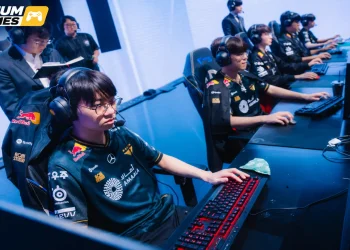
The historical debate over whether esports is a “real sport” has largely been settled by international governing bodies. Traditional athletic authorities worldwide recognize professional gamers as elite digital athletes. Professional esports athletes train up to 10 to 14 hours a day, adhere to tailored physical regimens, consult sports psychologists, and suffer from overuse injuries such as carpal tunnel syndrome and cervical strain. Furthermore, competitive gaming has earned official medal-event status at the Asian Games and the Southeast Asian Games, culminating in the International Olympic Committee (IOC) creating the Olympic Esports Games.
The History and Explosive Growth of Esports
Esports did not materialize overnight as a product of modern high-speed broadband. It represents the culmination of a half-century of technological evolution, digital culture, and community passion.
The Foundational Years (1970s – 1980s)
The earliest documented video game competition took place in October 1972 at Stanford University’s Artificial Intelligence Laboratory. Students competed against one another in the space combat simulator Spacewar!, vying for the grand prize of a one-year subscription to Rolling Stone magazine. In 1980, Atari staged the National Space Invaders Championship across the United States. Attracting more than 10,000 participants, it became the first competitive gaming event to capture widespread national media coverage.
The LAN Era and the South Korean Revolution (1990s – 2000s)
During the 1990s, the emergence of local area networks (LAN) and dial-up internet connections enabled multiplayer first-person shooters such as Doom, Quake, and the pioneering community modification Counter-Strike. Tournaments like the Cyberathlete Professional League (CPL) and QuakeCon proved that players would travel across continents to compete for cold, hard cash.
Meanwhile, the 1997 Asian financial crisis prompted the South Korean government to invest aggressively in nationwide high-speed broadband infrastructure. Cybercafés, known locally as “PC Bangs,” mushroomed across every city block. Blizzard Entertainment’s sci-fi real-time strategy game StarCraft: Brood War transformed into a national obsession. South Korea established the Korean e-Sports Association (KeSPA) under the Ministry of Culture, Sports and Tourism, built dedicated 24-hour cable television gaming networks like OGN, and introduced the world to the modern infrastructure of pro gaming houses, team sponsorships, and celebrity athletes.
The Live-Streaming Boom and Stadium Arenas (2010s – Present)
The launch of Twitch.tv in 2011, paired with the rise of free-to-play competitive titles like League of Legends and Dota 2, removed all geographical and financial barriers for prospective fans. Audiences no longer needed specialized cable subscriptions; anyone with an internet connection could stream world championship matches live in high definition for free.
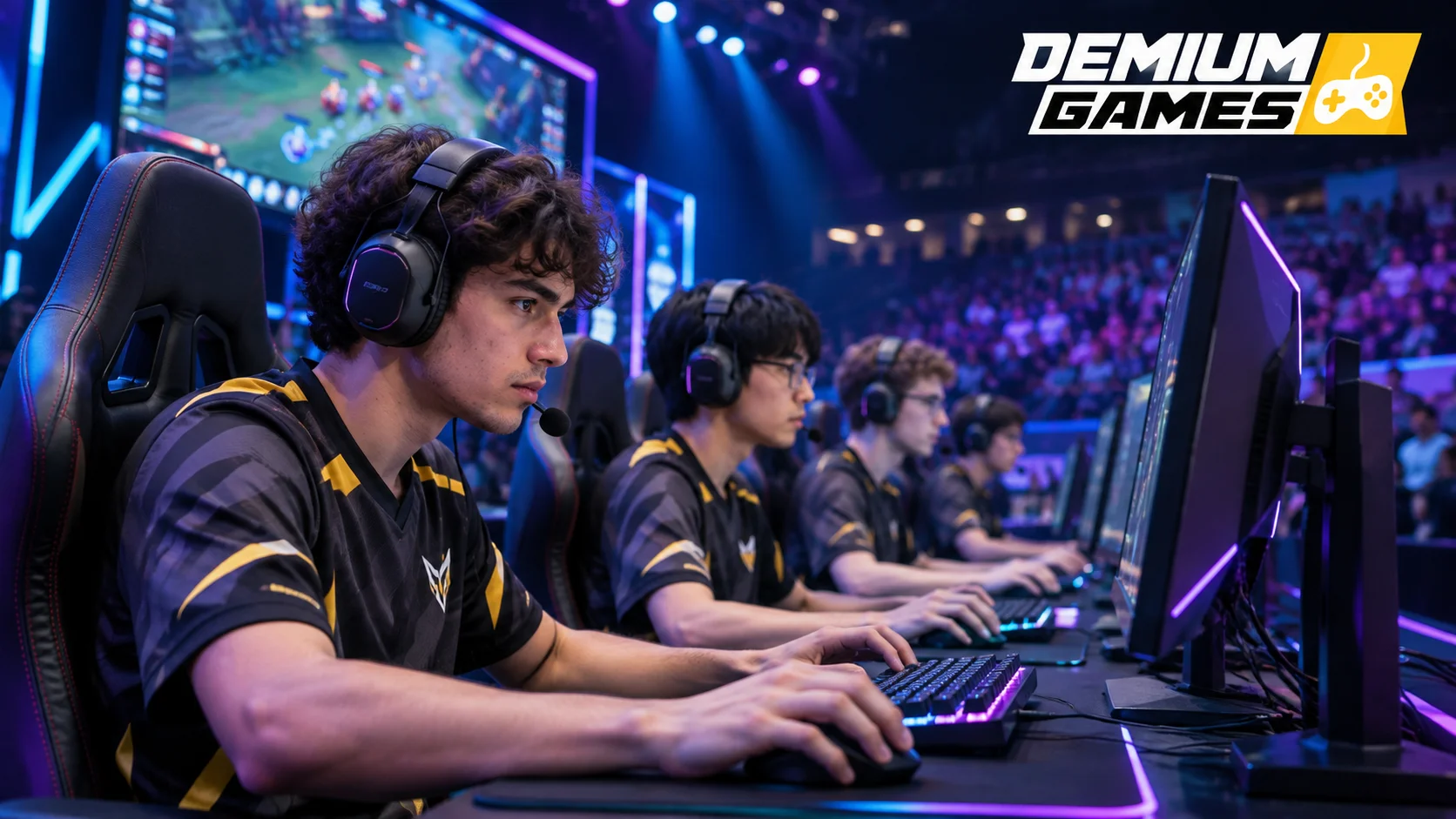
Global viewership scaled to unprecedented heights. Verified audience measurements compiled by Esports Charts – Global Viewership Data reveal that major esports spectacles—such as the League of Legends World Championship, the Free Fire World Series, and Counter-Strike Majors—consistently generate peak concurrent audiences in the millions, rivaling and frequently surpassing traditional broadcasts of the NBA Finals, Wimbledon, and NHL Stanley Cup.
The Most Popular Competitive Esports Genres
Just as traditional athletics encompasses sports as diverse as sprinting, rugby, and chess, esports comprises distinct genres, each featuring entirely unique rulesets, tempos, and strategic depths. Explore the biggest competitive esports titles in the world across the five foundational categories below:
1. MOBA (Multiplayer Online Battle Arena)
Two teams of five players clash on a symmetrical map featuring three primary lanes and an intervening jungle territory. Each player selects a unique character (Champion or Hero) possessing distinct offensive, defensive, or utility spells. Teams must farm gold from AI minions, secure neutral map objectives, destroy enemy defensive towers, and ultimately demolish the core structure inside the opponent’s base.
- Premier Titles: League of Legends (LoL), Dota 2, Honor of Kings, Mobile Legends: Bang Bang.
- Key Appeal: Monumental strategic depth, complex drafting phases, vision control mechanics, and breathtaking five-on-five teamfights.
2. Tactical FPS (First-Person Shooter) & Hero Shooters
In tactical first-person shooters, two squads take turns attacking and defending designated bomb sites. Players view the action through their character’s eyes. Elimination is swift—often taking just a single well-placed shot to the head—and players do not respawn until the following round.
- Premier Titles: Counter-Strike 2 (CS2), Valorant, Tom Clancy’s Rainbow Six Siege.
- Key Appeal: Pixel-perfect crosshair accuracy, intelligent utility deployment (smoke grenades, flashes, recon abilities), precise round economy management, and heart-stopping 1-versus-many “clutch” scenarios.
3. Battle Royale
Dozens of solo competitors or multi-person squads drop out of an aircraft onto an expansive, isolated island map with empty inventories. Players must scavenge for weapons, protective armor, and medical supplies while remaining inside a steadily shrinking circular safe zone. The last team or player left standing claims victory.
- Premier Titles: PUBG: Battlegrounds, Apex Legends, PUBG Mobile, Free Fire.
- Key Appeal: High-stakes survival tension, dynamic decision-making under intense spatial pressure, and thrilling skirmishes where chaos can erupt from any direction.
4. RTS (Real-Time Strategy)
The definitive test of individual mental processing speed and multitasking ability. Two players oversee opposing futuristic or historical civilizations from an overhead isometric perspective. Each competitor must simultaneously gather natural resources, construct and power base infrastructure, research technology upgrades, scout opponent movements, and direct vast armies in real time.
- Premier Titles: StarCraft II, Warcraft III, Age of Empires IV.
- Key Appeal: Inhuman mechanical speed (pro players routinely sustain 300 to 400 Actions Per Minute), deceptive tactical maneuvers, and macro-economic chess played at lightning velocity.
5. FGC (Fighting Game Community)
Pure one-on-one virtual martial arts contested on a fixed two-dimensional or three-dimensional plane. Rounds last roughly 60 to 90 seconds, with combatants utilizing punches, kicks, throws, special projectiles, and complex combo chains to deplete their rival’s vitality gauge.
- Premier Titles: Street Fighter 6, Tekken 8, Super Smash Bros. Ultimate, Guilty Gear -Strive-.
- Key Appeal: Intense psychological mind games (Yomi), close-quarters spacing control (Footsies), frame-perfect counter-attacks, and deeply rooted community tournament traditions.
The Esports Ecosystem: Who Makes the Industry Run?
Executing an international esports circuit requires a collaborative network of specialized stakeholders working in tandem across technical, creative, and commercial fronts:
- Game Developers and Publishers: Unlike basketball or soccer, which exist in the public domain, every video game is proprietary intellectual property. Companies such as Riot Games, Valve Corporation, Epic Games, Krafton, and Capcom own their games entirely. They hold the ultimate authority to dictate balance patches, license broadcasting rights, and structure league formats.
- Esports Organizations and Franchises: Iconic clubs like T1, Cloud9, Team Liquid, Fnatic, Gen.G, and G2 Esports operate similarly to traditional sports franchises. They recruit talent, negotiate multi-year player contracts, build high-performance training headquarters, produce merchandise, and secure multi-million-dollar commercial brand partnerships.
- Professional Players and Performance Staff: The central attraction of the competitive scene. Elite players are supported by comprehensive backroom personnel: Head Coaches who draft strategies, Strategic Analysts who crunch telemetry data, Physical Therapists who manage wrist and posture health, and Performance Psychologists who prepare minds for high-pressure arena stages.
- Tournament Organizers and Broadcast Production Crews: Independent tournament operators like ESL FACEIT Group, BLAST, and PGL—alongside in-house publisher production teams—design world-class physical stages, manage complex networking infrastructure, and hire casters, desk analysts, and stage hosts. Understanding their systems requires studying the diverse esports tournament formats used to eliminate contenders fairly, such as Swiss Systems and Double-Elimination brackets.
- Corporate Sponsors and Commercial Partners: The economic backbone of modern esports. The sector draws financial sponsorship from endemic computer hardware brands (Intel, AMD, ASUS ROG, Razer, Logitech) as well as non-endemic multinational corporations seeking direct access to Gen Z and millennial demographics (Red Bull, Mercedes-Benz, Mastercard, Nike, Sony).
- The Global Fan Community: Without fans watching digital streams, filling arenas, purchasing digital in-game team skins, and participating in online community banter, the multi-billion-dollar economic engine of competitive gaming would cease to function.
A Beginner’s Step-by-Step Guide to Watching Esports
If you are ready to dive into competitive gaming as a spectator, follow these five practical steps to start following the action effortlessly:
Step 1: Choose an Accessible Game to Start With
If you have never played complex competitive titles before, start your journey by watching a Tactical FPS like Counter-Strike 2 or Valorant. The fundamental objective is immediately intuitive even to casual viewers: one squad attacks a site with a bomb, the other squad defends it, and bullets eliminate opponents instantly. Once you feel comfortable following the camera work and pacing, you can branch out into the richer, more abstract world of MOBAs like League of Legends.
Step 2: Learn the Essential Competitive Vocabulary
You do not need to memorize every piece of jargon on day one, but understanding a handful of universally used terms will help you decode match broadcasts:
- Meta (Most Effective Tactic Available): The prevailing strategies, team compositions, character choices, and item builds considered optimal in the current software patch.
- Macro: Broad, high-level map strategy, including rotations, objective control, lane pressure, and resource allocation.
- Micro: Moment-to-moment individual mechanical execution, including movement precision, targeting, and quick-reflex spell combinations.
- Clutch: A high-pressure scenario where a solitary surviving player successfully overcomes numerical disadvantage to win the round for their team.
- Nerf / Buff: Official balance adjustments pushed by developers to decrease (nerf) or increase (buff) the potency of a character, weapon, or game mechanic.
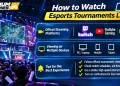
Step 3: Pick Your Preferred Streaming Platform
Professional esports competitions are broadcast free of charge across several major digital channels:
- Twitch: The epicenter of Western gaming culture, famous for its hyperactive live chat room, custom community emotes, and official co-streams hosted by popular internet personalities.
- YouTube Gaming: Delivers pristine video fidelity, effortless compatibility with living-room smart TVs, and the indispensable ability to pause, rewind, and re-watch electric plays during live broadcasts.
- Official Publisher Portals: Hubs such as lolesports.com or valorantesports.com, which provide integrated schedules, real-time match statistics, player inventories, and exclusive digital rewards for logged-in spectators.
Step 4: Find a Compelling Team or Rivalry to Support
Esports becomes profoundly engaging when you invest emotional stakes into the outcome. Look into the storied legacy of legendary competitors like Lee “Faker” Sang-hyeok—the undisputed “Unkillable Demon King” of League of Legends who has claimed world championships across multiple decades. Follow the bitter geographic rivalries between European and North American squads, or cheer for an underdog team battling through open qualifiers to upset entrenched titans. Human stories make digital competition unforgettable.
Step 5: Mark the Premier World Championships on Your Calendar
Every competitive circuit builds toward an annual pinnacle event. These global spectacles represent the highest echelon of competitive gaming and showcase the most electric arena atmospheres:
- League of Legends World Championship (“Worlds”): Held every autumn (October–November), this is the undisputed flagship event of competitive esports, featuring breathtaking opening ceremonies, stadium-scale crowds, and unmatched production values.
- Counter-Strike Major Championships: Bi-annual tournaments officially sponsored by Valve, celebrated for raw mechanical intensity, historic arena venues, and legendary crowd chants.
- Valorant Champions: The dramatic multi-week finale of the global Valorant Champions Tour (VCT) circuit, gathering top tactical shooter squads from the Americas, EMEA, Pacific, and China.
- The International (Dota 2): A tournament world-renowned for its historic, crowd-funded prize pools, dramatic multi-million-dollar swings, and the legendary Aegis of Champions trophy.
Conclusion: The Future of Digital Athletics
Esports is not a passing technological novelty or a short-lived generational fad; it is the natural evolution of sport and spectacle in an interconnected, digital-first world. Beneath the vibrant on-screen effects and rapid crosshairs lie the exact same virtues that have defined human athletics for millennia: relentless dedication, strategic brilliance, teamwork under pressure, and the pursuit of competitive perfection. Pick an upcoming match broadcast this week, tune in to the stream, and immerse yourself in the thrills of modern electronic sports.